
Mango Sticky Rice Recipe: The Thai Dessert Everyone Is Making
Affiliate disclosure: TopFoodNews may earn a commission if you buy through links on this page, at no extra cost to you.
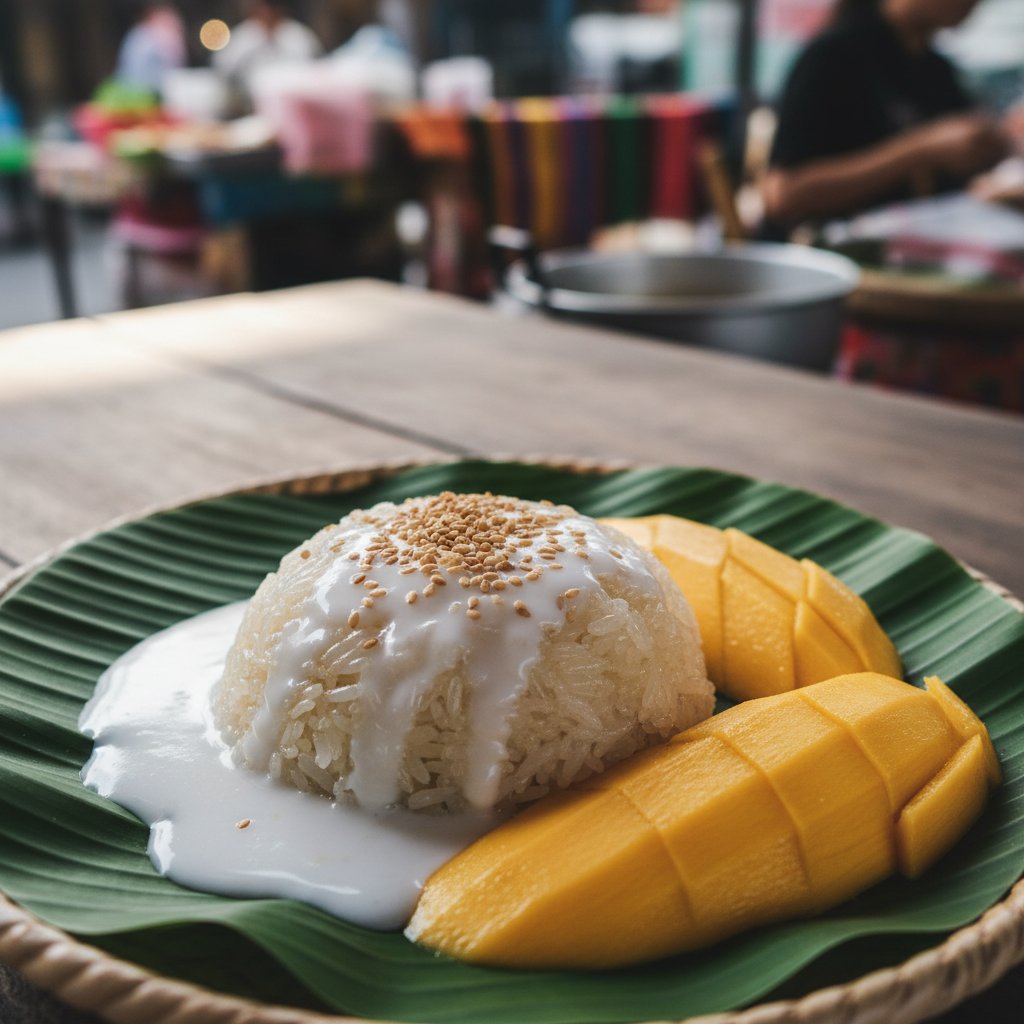
Mango sticky rice is Thailand's most beloved street dessert - glutinous rice soaked in sweetened coconut milk, served warm alongside slices of ripe mango and drizzled with a salted coconut cream sauce. In Bangkok and Chiang Mai, vendors sell it wrapped in banana leaves from carts parked outside temples and night markets. You don't need to be in Thailand to make it. You need two cups of glutinous rice and a ripe mango.
What Makes Mango Sticky Rice Different from Regular Rice Pudding
The rice in this recipe is glutinous rice, also called sweet rice or sticky rice. It contains a different starch structure than jasmine or basmati - almost no amylose and high amounts of amylopectin - which gives it that dense, chewy, clingy texture that absorbs coconut milk like a sponge. When the warm coconut-soaked rice hits a cold mango slice, you get one of the best flavor contrasts in any cuisine: sweet, salty, creamy, fruity, and satisfying all in the same bite.
In Thailand, this dish is seasonal. Mango sticky rice only appears when Nam Dok Mai mangoes are at peak ripeness - usually April through June. That timing is why it dominates every food market in Bangkok during Songkran, Thailand's New Year festival. The rest of the year, vendors substitute with other mango varieties or skip it entirely.
You're making it today, and you're not limited by Thailand's mango season. Ataulfo mangoes (also called honey mangoes or champagne mangoes) from Mexico are the best substitute available in the US - they're small, golden, fiber-free, and intensely sweet. Avoid Tommy Atkins mangoes (the large red-green ones at most supermarkets) - they're stringy and tart and will ruin the dish.
Ingredients
For the sticky rice:
- 2 cups glutinous rice (sweet rice), soaked overnight or minimum 4 hours
- 1 can (13.5 oz) full-fat coconut milk
- 3 tablespoons granulated sugar
- 1/2 teaspoon fine sea salt
For the salted coconut cream topping:
- 1/2 cup full-fat coconut milk
- 1 tablespoon sugar
- 1/4 teaspoon fine sea salt
- 1 teaspoon cornstarch mixed with 1 tablespoon cold water
For serving:
- 3 ripe Ataulfo or Nam Dok Mai mangoes, peeled and sliced
- Toasted sesame seeds or split mung beans (optional, traditional garnish)
Equipment
You need a steamer. A bamboo steamer set over a wok works best. A metal steamer basket set inside a pot works fine. Do not try to cook glutinous rice in a regular rice cooker - it will turn to mush.
Step-by-Step Instructions
Step 1: Soak the rice
Rinse the glutinous rice under cold water until the water runs mostly clear. Cover with cold water and soak for at least 4 hours, preferably overnight. This is non-negotiable - unsoaked glutinous rice steams unevenly and stays hard in the center.
Step 2: Steam the rice
Drain the soaked rice and transfer to a cheesecloth-lined steamer basket (or a clean thin kitchen towel). Fold the cloth over the rice loosely. Steam over vigorously boiling water for 20 to 25 minutes, until the rice is fully translucent, tender, and sticky throughout. Check at 20 minutes by pressing a grain between your fingers - it should smash easily with no chalky white center.
Step 3: Make the sweet coconut milk
While the rice steams, combine the coconut milk, sugar, and salt in a small saucepan. Heat over medium-low, stirring until the sugar dissolves completely. Do not boil. Remove from heat.
Step 4: Season the rice
Transfer the hot steamed rice to a large bowl. Pour the warm coconut milk mixture over it immediately. Stir gently to combine, then cover with plastic wrap and let it absorb for 15 to 20 minutes. The rice will soak up most of the liquid and turn glossy, soft, and fragrant. This resting period is where the magic happens - don't rush it.
Step 5: Make the salted coconut topping
Combine the remaining coconut milk, sugar, and salt in a small saucepan over medium heat. Stir in the cornstarch slurry and cook for 2 to 3 minutes, stirring constantly, until slightly thickened. It should coat a spoon lightly. Remove from heat. This topping is what separates authentic Thai mango sticky rice from every pale imitation - the salt in the cream cuts through the sweetness and makes every element pop.
Step 6: Assemble and serve
Scoop a generous mound of warm sticky rice onto a plate or banana leaf. Fan sliced mango alongside it. Drizzle the salted coconut cream topping over the rice. Finish with toasted sesame seeds or split mung beans if using. Serve immediately while the rice is still warm.
Tips for Perfect Results
Use full-fat coconut milk only. Light coconut milk doesn't have enough fat to give the rice its characteristic richness. If your coconut milk has separated in the can, that's a good sign - scoop the thick cream from the top for the topping sauce.
Warm mango, cold mango, or room temperature In Thailand, vendors serve the rice warm and the mango at room temperature. Cold mango from the fridge works but dulls the flavor slightly. If you refrigerated your mangoes, let them sit out for 20 minutes before serving.
Make-ahead notes: Sticky rice does not store well. It hardens in the refrigerator and becomes unpleasantly dense. Make it fresh and serve within 2 hours of cooking. The coconut topping can be made a day ahead and reheated gently.
Where to find glutinous rice: Any Asian grocery store carries it. Look for bags labeled "glutinous rice," "sweet rice," or "mochi rice." Thai brands like Three Horses or Elephant are reliable. Online, it's widely available on Amazon.
The Street Food Version vs the Restaurant Version
At a Bangkok night market, mango sticky rice costs about 60 to 80 Thai baht - roughly $2. It comes in a small styrofoam container or wrapped in plastic, with the coconut sauce already drizzled on top. The mango is always freshly cut to order. Street vendors specialize in this one dessert and serve hundreds of portions a night during mango season.
Restaurant versions in the US often get it wrong. They use jasmine rice instead of glutinous rice, skip the salted topping entirely, and serve it cold from a refrigerator. The result tastes nothing like the original. This recipe is the street vendor version - the one that's been perfected on a cart, not in a test kitchen.
Frequently Asked Questions
Can I use a rice cooker for glutinous rice Standard rice cookers are not designed for glutinous rice and will produce mushy, undercooked results. Use a steamer. Some rice cookers have a specific "sweet rice" setting - if yours does, it may work, but steaming is always more reliable.
What if I can't find Ataulfo mangoes Champagne mangoes and honey mangoes are the same variety and are found at most Mexican grocery stores and Trader Joe's when in season (March through July). In a pinch, a very ripe yellow mango from any brand works. Avoid red-and-green Tommy Atkins varieties.
How long does mango sticky rice keep Best eaten immediately. The rice firms up within a couple of hours at room temperature and becomes hard if refrigerated. If you have leftover rice, wrap it tightly and microwave with a splash of water to revive it slightly, though the texture won't fully recover.

Ingredients
- 2 cups glutinous rice (sweet rice), soaked overnight or minimum 4 hours
- 1 can (13.5 oz) full-fat coconut milk
- 3 tablespoons granulated sugar
- 1/2 teaspoon fine sea salt
- 1/2 cup full-fat coconut milk for salted topping
- 1 tablespoon sugar for salted topping
- 1/4 teaspoon fine sea salt for salted topping
- 1 teaspoon cornstarch mixed with 1 tablespoon cold water
- 3 ripe Ataulfo or Nam Dok Mai mangoes, peeled and sliced
- 2 tablespoons toasted sesame seeds or split mung beans, optional garnish
Instructions
- Rinse the glutinous rice under cold water until the water runs mostly clear, then soak for at least 4 hours or overnight.
- Drain the soaked rice and steam it in a lined steamer basket for 20 to 25 minutes, until translucent, tender, and sticky throughout.
- Warm 1 can full-fat coconut milk with 3 tablespoons sugar and 1/2 teaspoon salt until dissolved, without boiling.
- Transfer the hot sticky rice to a bowl, pour the warm coconut milk over it, stir gently, cover, and let absorb for 15 to 20 minutes.
- For the topping, warm 1/2 cup coconut milk with 1 tablespoon sugar and 1/4 teaspoon salt, then whisk in the cornstarch slurry until lightly thickened.
- Slice the mangoes, plate them with the warm sticky rice, drizzle with salted coconut cream, and garnish with toasted sesame seeds or split mung beans.
in your inbox every week.
Helpful tools for this recipe
TopFoodNews may earn from qualifying purchases. These are practical kitchen staples that fit this kind of recipe, not random filler.
Affiliate disclosure: as an Amazon Associate, TopFoodNews earns from qualifying purchases.
Get weekly recipes + food deals
One quick TopFoodNews email with fresh recipes, grocery finds, fast-food drops, and kitchen shortcuts worth saving.