
Vietnamese Bánh Mì Sandwich: The Perfect Balance of Sweet, Sour, Savory, and Spice
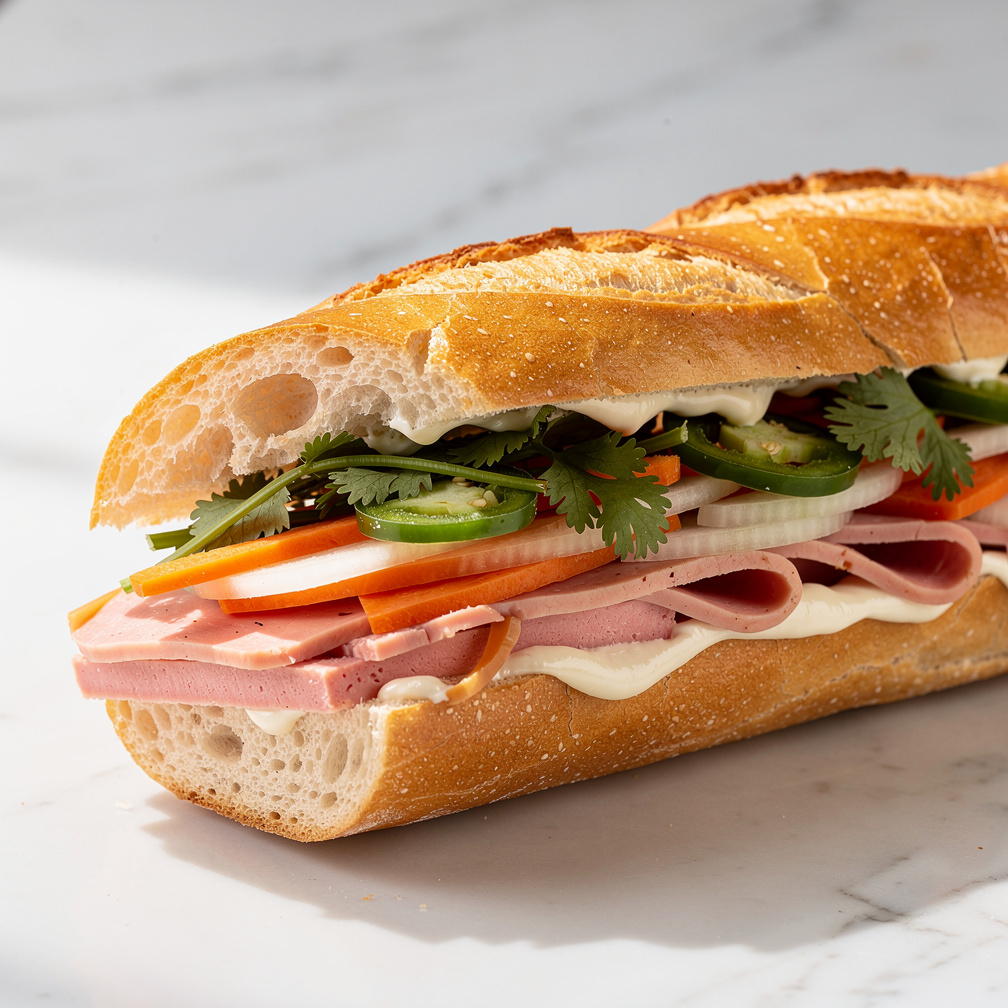
Vietnamese Bánh Mì Sandwich: The Perfect Balance of Sweet, Sour, Savory, and Spice
There are sandwiches, and then there is bánh mì. This Vietnamese classic is not just lunch. It is an experience. In a single bite, you get crispy bread, creamy pâté, tangy pickles, fresh herbs, and a whisper of heat. No wonder it became a street food phenomenon across the world.
What makes bánh mì so exceptional is how each ingredient serves a purpose. The French baguette provides structure and texture. The pâté adds richness and umami. The pickled vegetables cut through that richness with acid and brightness. The fresh cilantro and jalapeños bring life and spice. When you put them together in the right way, something magical happens.
The beauty of making bánh mì at home is that you control the quality of each component. You choose your bread, your cold cuts, your pickles. You make it the way you want it. This recipe teaches you how to build an authentic bánh mì that rivals what you would get from a street vendor in Hanoi or Ho Chi Minh City.
The history of bánh mì tells a fascinating story about Vietnamese food. French colonization introduced baguettes and pâté to Vietnam in the 19th century. The Vietnamese adapted these ingredients to create something entirely their own. They added pickled vegetables, fresh herbs, and spicy sauces. They turned a French sandwich into a Vietnamese masterpiece. Today, bánh mì is considered one of the best sandwiches in the world.
Making bánh mì requires attention to detail, but the actual work is simple. You are not cooking anything - you are assembling. You buy quality ingredients and layer them correctly. This hands-off approach is what makes bánh mì perfect for home cooks. You do not need advanced culinary skills. You need good ingredients and a steady hand.
This recipe serves one person as a full meal, though you can easily double or triple it for a party. The total time from start to finish is about 15 minutes once you have all your ingredients prepped. If you make the pickled vegetables ahead, you can have bánh mì on the table in five minutes flat.
Ingredients
For the Bánh Mì
- 1 French baguette, about 12 inches long
- 3 tablespoons pâté (chicken liver pâté is traditional, but any pâté works)
- 2 teaspoons mayonnaise
- 2 teaspoons Vietnamese maggi sauce or soy sauce
- 3 ounces Vietnamese cold cuts (such as bánh mì-style pork roll, or use ham and sliced Vietnamese sausage)
- 2 ounces pickled daikon and carrot, drained well (about 1/3 cup)
- 1/2 jalapeño pepper, thinly sliced
- Handful of fresh cilantro leaves
- Pinch of ground white pepper or black pepper
For the Pickled Vegetables (if making from scratch)
- 1 medium carrot, cut into thin matchsticks
- 1/4 small daikon radish, cut into thin matchsticks
- 3/4 teaspoon salt
- 1/2 cup rice vinegar
- 1/2 cup water
- 1 tablespoon sugar
Instructions
For the Pickled Vegetables (if making fresh)
If you are using store-bought pickled vegetables, skip this step. If you want to make them fresh, combine the salt with the carrot and daikon matchsticks in a bowl. Let sit for 5 minutes. This draws out water and makes the vegetables more tender. Drain well. In a separate bowl, stir together the rice vinegar, water, and sugar until the sugar dissolves. Pour the brine over the drained vegetables and let sit for at least 30 minutes. You can make these a day or two ahead and keep them in the refrigerator.
Assembly
Heat your oven to 375 degrees Fahrenheit. Slice the baguette in half lengthwise, creating two long pieces. Place them cut-side up on a baking sheet. Brush the insides lightly with oil or just pop them in the oven for 3 to 4 minutes until the cut sides are golden and slightly crispy. This toasting step is crucial. It creates a barrier between the bread and the wet ingredients, preventing soggy sandwiches. Remove from the oven and let cool for 1 minute.
On the bottom half of the baguette, spread a thin layer of pâté, about 1/4 inch thick. Do not go overboard with the pâté. You want balance, not a pâté sandwich. Next, drizzle the mayonnaise and Vietnamese maggi sauce over the pâté. Arrange the cold cuts on top, overlapping them slightly. They should cover about two-thirds of the bread.
Now comes the fun part. Pile on the pickled daikon and carrot. Distribute them evenly so you get some in every bite. Scatter the jalapeño slices on top. Add the cilantro leaves - be generous here. Sprinkle a tiny pinch of white pepper or black pepper over everything.
Place the top half of the baguette on the sandwich and press down gently. Cut the sandwich in half if you prefer. Serve immediately. The warm bread, cool fillings, and sharp flavors should hit your palate all at once.
Tips for the Best Bánh Mì at Home
Invest in a good baguette. The bread is not a supporting player in bánh mì - it is a star. Look for a baguette with a crispy crust and an airy, open crumb. If your grocery store bakery does not have one, find a Vietnamese bakery nearby. The difference will shock you.
Toast the bread. This is non-negotiable. Toasting creates texture and prevents the sandwich from becoming a soggy mess. It takes three minutes and it is the difference between a good bánh mì and a great one.
Buy pre-made pickled vegetables if you are in a hurry. Vietnamese markets and even many regular supermarkets now sell jars of pickled daikon and carrot. There is no shame in using them. What matters is the final sandwich, not your ego.
Use Vietnamese pâté if you can find it. Regular chicken liver pâté works fine, but Vietnamese pâté has a specific texture and flavor that is harder to replicate. It is denser and more savory. Look for it at Vietnamese markets or specialty food shops.
Make the pickles ahead. If you are making pickled vegetables at home, do it a day or two before. They taste better after they have had time to pickle, and you will have one fewer thing to do when you want bánh mì.
Layer in the right order. Pâté and mayo first, then cold cuts, then wet ingredients. This order ensures that every component contributes to the eating experience and nothing gets overlooked.
Do not skip the jalapeños. Bánh mì needs heat. Even if you do not love spicy food, keep the jalapeños thin and light. They add brightness, not just heat. If you are sensitive to spice, use less.
Variations and Substitutions
Bánh mì is endlessly customizable. In Vietnam, you might find bánh mì with fried tofu, boiled eggs, sardines, or beef. For vegetarian bánh mì, skip the cold cuts and pâté and use fried tofu or extra pickled vegetables. Add a fried or boiled egg for protein. The structure stays the same. The fillings change.
If you cannot find Vietnamese cold cuts, use ham and Vietnamese sausage, which are easier to source. If you cannot find pâté, spread a thin layer of liver sausage or skip it altogether and add an extra layer of mayonnaise. If you have an allergy or just a strong preference, adapt the recipe to your needs.
Storage and Make-Ahead Tips
Bánh mì is best eaten immediately after assembly. The bread stays crispy and all the flavors are fresh. However, you can prep your ingredients the night before and assemble the sandwich in the morning. Store the cold cuts, pâté, mayo, and pickled vegetables in separate containers. Toast the bread right before you eat and assemble from there.
Why bánh mì belongs in your regular rotation
This Vietnamese sandwich has earned its place on the world stage. It is flavorful, it is fast, and it is deeply satisfying. Once you master the basic recipe, you will find yourself making bánh mì on lazy afternoons, for lunch the next day, and for weekend brunch with friends. It is the kind of sandwich that gets better the more you make it, because you learn exactly how you like it.
Make bánh mì this week. Find a good baguette. Pick up some pickled vegetables and pâté. Toast the bread. Assemble. Eat. You will understand why this sandwich has captivated food lovers everywhere.

Ingredients
- For the pickled vegetables:
- 1 cup julienned carrot
- 1 cup julienned daikon radish
- 1/2 cup rice vinegar
- 1/2 cup warm water
- 2 tablespoons sugar
- 1 teaspoon kosher salt
- For the sandwich:
- 4 small Vietnamese baguettes or light French rolls
- 1 pound pork tenderloin, grilled pork, roast pork, or chicken thigh
- 2 tablespoons soy sauce
- 1 tablespoon fish sauce
- 1 tablespoon honey or sugar
- 1 tablespoon neutral oil
- 1 garlic clove, grated
- 1/2 cup mayonnaise
- 2 tablespoons pu00e2tu00e9, optional but traditional
- 1 cucumber, sliced into thin spears
- 1 jalapeu00f1o, thinly sliced
- 1 cup fresh cilantro sprigs
- Maggi seasoning or soy sauce, to taste
Instructions
- Make the quick pickles. Stir rice vinegar, warm water, sugar, and salt until dissolved. Add carrot and daikon, then let sit for at least 30 minutes while you prepare the filling.
- Marinate the protein. Mix soy sauce, fish sauce, honey, oil, and grated garlic. Coat the pork or chicken and let it sit for 20 minutes, or refrigerate for up to 8 hours.
- Cook the protein in a hot skillet, grill pan, or grill until browned and cooked through. Rest for 5 minutes, then slice thinly across the grain.
- Warm the baguettes until the crust is crisp and the inside is soft. Split each roll without cutting all the way through.
- Spread mayonnaise on one side of the bread and pu00e2tu00e9 on the other side if using. Add sliced meat, cucumber, pickled carrot and daikon, jalapeu00f1o, and cilantro.
- Finish with a few drops of Maggi seasoning or soy sauce. Serve immediately while the bread is crisp and the pickles are bright.
in your inbox every week.
Helpful tools for this recipe
TopFoodNews may earn from qualifying purchases. These are practical kitchen staples that fit this kind of recipe, not random filler.
Affiliate disclosure: as an Amazon Associate, TopFoodNews earns from qualifying purchases.
Get weekly recipes + food deals
One quick TopFoodNews email with fresh recipes, grocery finds, fast-food drops, and kitchen shortcuts worth saving.