5 Ways You Are Ruining Your Non-Stick Pan (And How to Fix It)
Affiliate disclosure: TopFoodNews may earn a commission if you buy through links on this page, at no extra cost to you. We only include products or sources that fit the story.
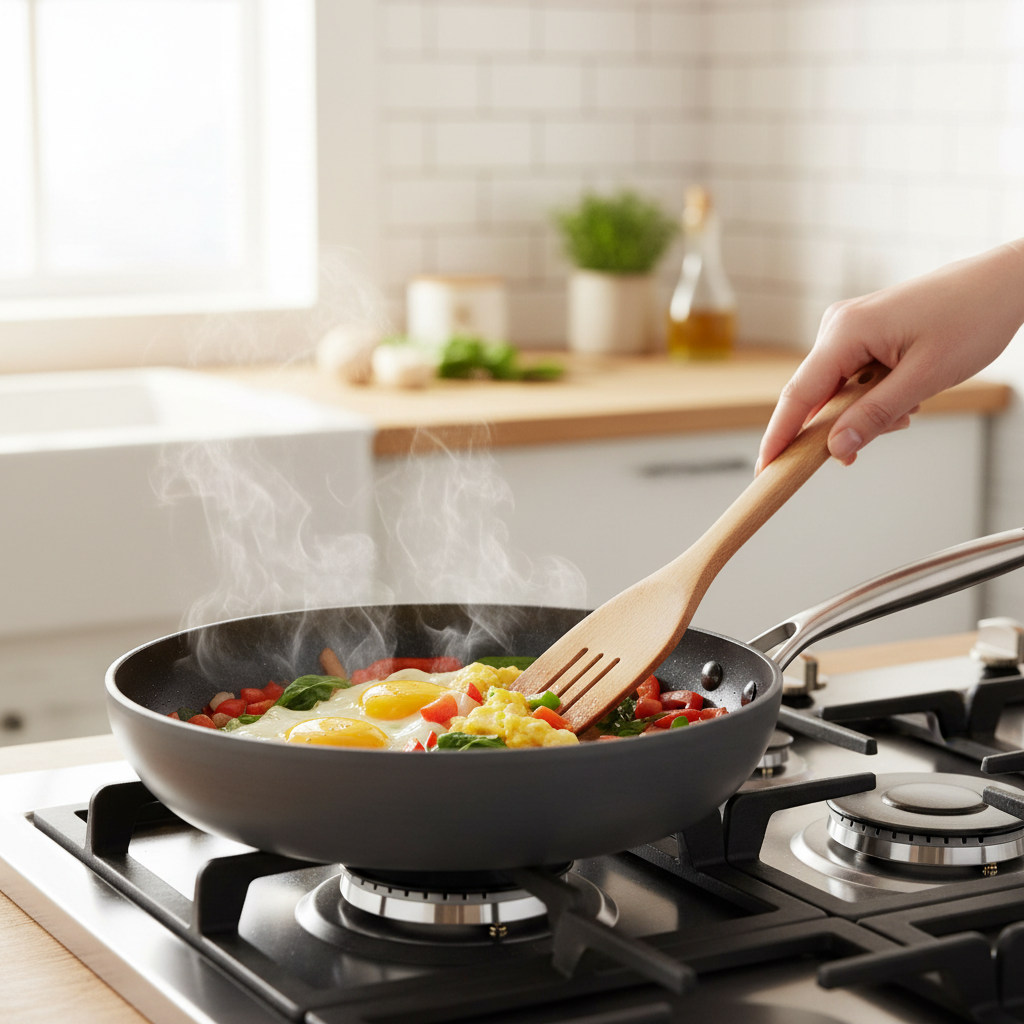
Non-stick pans are one of the most abused pieces of cookware in any home kitchen. People use metal spatulas on them, crank the heat to max, and toss them in the dishwasher without a second thought. Then they wonder why eggs stick and the coating starts flaking off after six months. Here are the five mistakes destroying your non-stick pan and exactly what to do instead.
1. Cooking on High Heat
Non-stick coatings are not built for high heat. Most PTFE-based coatings start to degrade around 500 degrees Fahrenheit and can release fumes that are harmful in poorly ventilated spaces. Consistent high heat warps the pan and kills the non-stick surface within months. Medium heat is all you need for eggs, pancakes, fish, and most things people reach for a non-stick to cook. High heat belongs to your cast iron or stainless steel.
2. Using Metal Utensils
This one is obvious but constantly ignored. Metal spatulas, whisks, and spoons scratch the coating and once it is scratched, food starts sticking right at those spots. Silicone or wood only. Non-negotiable. If you already have a scratched pan, it is time to replace it. Cooking on damaged non-stick is not worth the risk.
3. Washing It in the Dishwasher
Dishwasher detergent is abrasive and the heat cycles in a dishwasher are brutal on non-stick coatings. Hand wash only, with warm water and mild dish soap. Dry it immediately. Do not let it soak. Most non-stick pans that end up in the dishwasher are dead within a year even if they claim to be dishwasher safe.
4. Stacking It Without Protection
Stacking pans directly on top of each other grinds the cooking surfaces together every time you reach for one. A pan protector pad between each pan or even just a folded dish towel keeps the surfaces from wearing against each other. This is the simplest habit that most people skip entirely.
5. Preheating It Empty on High
Dry preheating on high heat is one of the fastest ways to destroy a non-stick. Always add a small amount of butter or oil before the pan gets hot, or at least bring the pan up slowly on medium. The fat creates a buffer between the heat and the coating.
How Long Should a Non-Stick Last
With proper care, a quality non-stick pan should last three to five years of regular use. Brands like All-Clad, Zwilling, and Scanpan make coatings that hold up well with the right treatment. Budget pans under $20 tend to degrade faster regardless of how carefully you treat them. If your eggs are sticking, your coating is gone. Time for a new pan.
When to Buy a New One
Scratches that go through the coating to the metal underneath mean it is time to replace. Warping so the pan rocks on a flat burner means it is time to replace. If food is sticking consistently on a pan you are treating correctly, the coating is dead and no amount of re-seasoning will fix a true non-stick surface. Non-stick is not cast iron - it does not improve with age. It depreciates. Build that expectation in from the start.
Budget for a replacement every two to three years if you use it regularly. The good news is that a quality non-stick pan in the $40 to $80 range will outlast multiple budget pans and cook noticeably better the whole time. Oxo, Nordic Ware, and Tramontina all make solid options at that price point. You do not need to spend $150 to get a pan that works well and holds up.
Shop the Tools
TopFoodNews may earn a small commission on purchases made through links on this page, at no extra cost to you.
{
"@context": "https://schema.org",
"@type": "FAQPage",
"mainEntity": [
{
"@type": "Question",
"name": "Where can I find the latest food deals and promotions",
"acceptedAnswer": {
"@type": "Answer",
"text": "TopFoodNews covers the latest food deals, promotions, and limited-time offers from major restaurant chains and food brands. Bookmark topfoodnews.com for daily updates."
}
},
{
"@type": "Question",
"name": "How long do restaurant promotions typically last",
"acceptedAnswer": {
"@type": "Answer",
"text": "Most restaurant promotions run for 1-4 weeks. Limited-time offers often end without notice, so it's best to take advantage of deals as soon as you see them."
}
},
{
"@type": "Question",
"name": "How do I find out about new food news first",
"acceptedAnswer": {
"@type": "Answer",
"text": "Subscribe to the TopFoodNews newsletter at topfoodnews.com/newsletter for daily food news, deals, and recipe drops delivered to your inbox."
}
}
]
}

in your inbox every week.