Cottage Cheese Pancakes: The Internet Favorite High-Protein Breakfast
Cottage cheese pancakes are everywhere right now, and the hype is not the problem. The problem is that most people are making them wrong, ending up with rubbery, eggy discs that taste like a protein shake someone tried to cook.
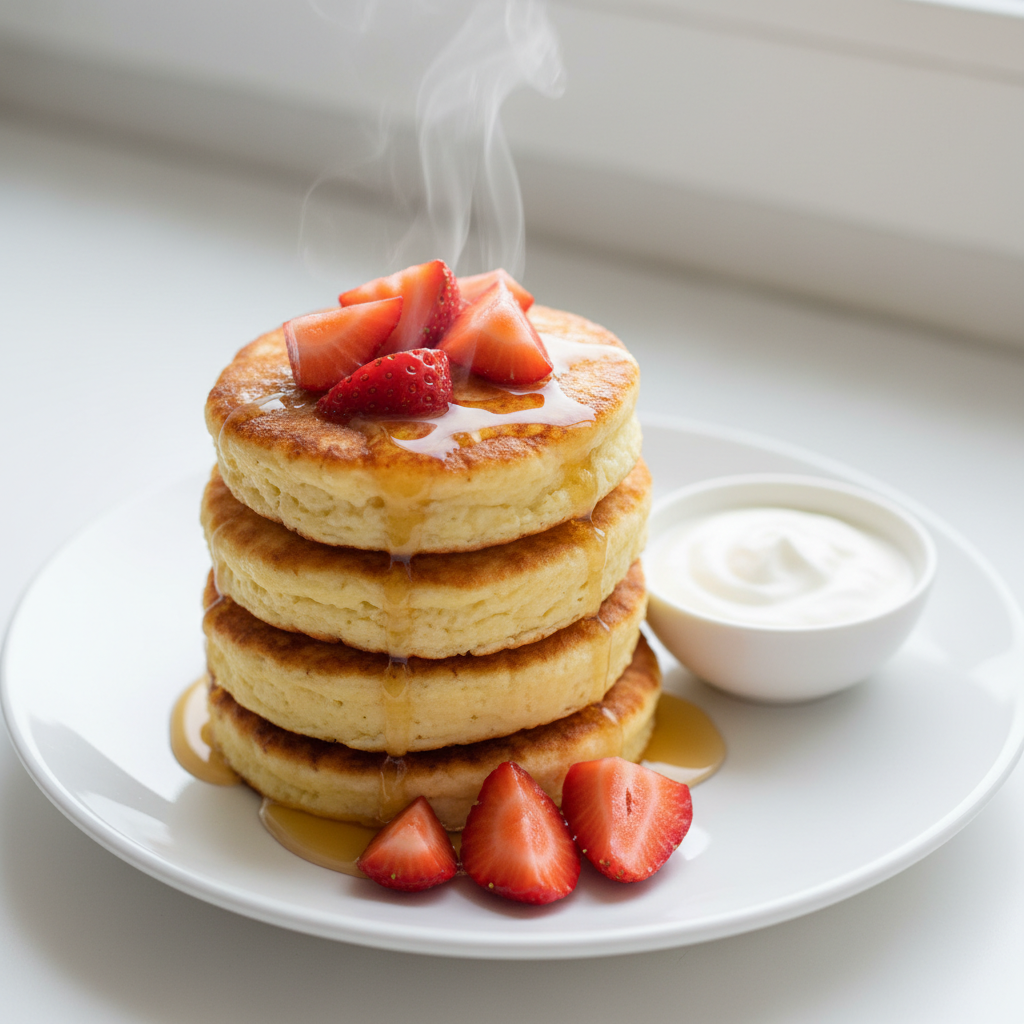
When they are done right, these pancakes are genuinely good. Soft in the center, golden at the edges, with a mild tang that plays well with maple syrup or fresh fruit. The protein is just a bonus.
Here is what actually works.
Why Cottage Cheese Works in Pancakes
Cottage cheese does two things in a pancake batter. It adds moisture without making the batter too loose, and it contributes protein that firms up cleanly during cooking without turning dense.
The curds break down when you blend the batter, which is a non-negotiable step. If you skip blending and add cottage cheese directly, you get visible curds in the finished pancake and an uneven texture throughout. Blend it smooth and the issue disappears entirely.
Full-fat cottage cheese is the right call here. The 2% versions work in a pinch, but the fat content in full-fat directly affects how the pancake sets and browns. Skim cottage cheese produces a wetter batter and a paler finish.
The Technique That Actually Matters
Pan temperature is the variable most people get wrong. Cottage cheese pancakes need a medium-low heat, not the medium-high you might use for standard buttermilk. Because the protein content is higher, they brown faster on the outside while the interior is still liquid if the heat is too aggressive.
A nonstick pan or a well-seasoned cast iron both work. Add a small amount of butter, let it foam and subside, then pour the batter. A quarter cup per pancake is about right for something that cooks evenly without being too thick to flip confidently.
The flip timing is easy to read. Watch the edges. When the edges look matte rather than glossy and a few bubbles form in the center without immediately collapsing, the pancake is ready. Flip once. Do not press it down. Let it finish on the second side for about ninety seconds.
Cottage Cheese Pancakes
Makes: 8 pancakes | Prep: 5 minutes | Cook: 20 minutes | Calories: ~180 per serving (2 pancakes)
Ingredients
- 1 cup full-fat cottage cheese
- 2 large eggs
- 1/2 cup all-purpose flour (or oat flour for gluten-free)
- 1 teaspoon baking powder
- 1 teaspoon vanilla extract
- 1 tablespoon honey or maple syrup
- Pinch of salt
- Butter for cooking
Instructions
- Add cottage cheese, eggs, vanilla, and honey to a blender. Blend on high for 20 seconds until completely smooth. No visible curds.
- Add flour, baking powder, and salt. Pulse 4 to 5 times until just combined. Do not over-blend at this stage or the pancakes will be tough.
- Let the batter rest for 3 minutes. It will thicken slightly.
- Heat a nonstick pan over medium-low. Add a small pat of butter. When the foam subsides, you are ready to cook.
- Pour 1/4 cup batter per pancake. Cook until edges are set and matte, about 2 to 3 minutes.
- Flip once. Cook another 60 to 90 seconds. Remove when the underside is golden.
- Serve immediately with maple syrup, fresh berries, or a spoonful of Greek yogurt.
Variations Worth Trying
Lemon Blueberry: Add a teaspoon of lemon zest to the batter and fold in a handful of fresh blueberries after blending. The lemon cuts through the richness and makes the whole thing feel lighter.
Cinnamon Oat: Swap all-purpose flour for oat flour and add half a teaspoon of cinnamon. Denser texture, better for keeping you full through a long morning.
Savory Version: Skip the vanilla and honey. Add a pinch of garlic powder and some chopped chives. Serve with a fried egg on top. This sounds strange and is genuinely excellent.
Storage and Reheating
Leftover pancakes keep in the fridge for three days in an airtight container. Reheat in a dry pan over low heat for two minutes per side, or in a 300-degree oven for about eight minutes. The microwave works but softens the edges in a way that is hard to recover from.
They also freeze well. Stack with parchment between each pancake, seal in a freezer bag, and pull out what you need. Straight from freezer to toaster works better than you would expect.
The Protein Breakdown
Two pancakes made with this recipe land around 18 to 20 grams of protein, depending on the exact cottage cheese brand. That is more than three eggs on their own. The carb count stays lower than standard pancakes because the batter uses less flour relative to the total volume.
For anyone tracking macros or just trying to eat something that keeps hunger at bay past 10am, these are a legitimate option that does not taste like compromise.
The internet found something worth sharing on this one.