The Salt-in-Boiling-Water Myth: What Actually Speeds Up Your Cooking
Ask ten home cooks whether you should add salt before or after the water boils and you will get ten different answers. It is one of the most debated moves in any kitchen, and for most people it comes down to what their mom did. Here is what actually happens when you drop salt into water and why it matters more than you think.
Does Salt Actually Make Water Boil Faster
Technically, yes. But not in any way you would notice. Salt raises the boiling point of water by a fraction of a degree. To get a meaningful difference you would need to add so much salt that the water becomes basically inedible. With a normal pinch or two The effect is close to zero. The boiling point changes by roughly 0.5 degrees Celsius per 58 grams of salt per liter of water. Your pasta pot is not getting there on table salt alone.
So Why Does Everyone Say to Salt the Water
Flavor. Full stop. This is the real reason chefs salt pasta water aggressively. The salt seasons the pasta from the inside out as it cooks. Without salt in the water, no amount of sauce will save flat, bland pasta. The water should taste like the sea, not like tears. That is the standard in most Italian kitchens and it holds up.
When to Add the Salt
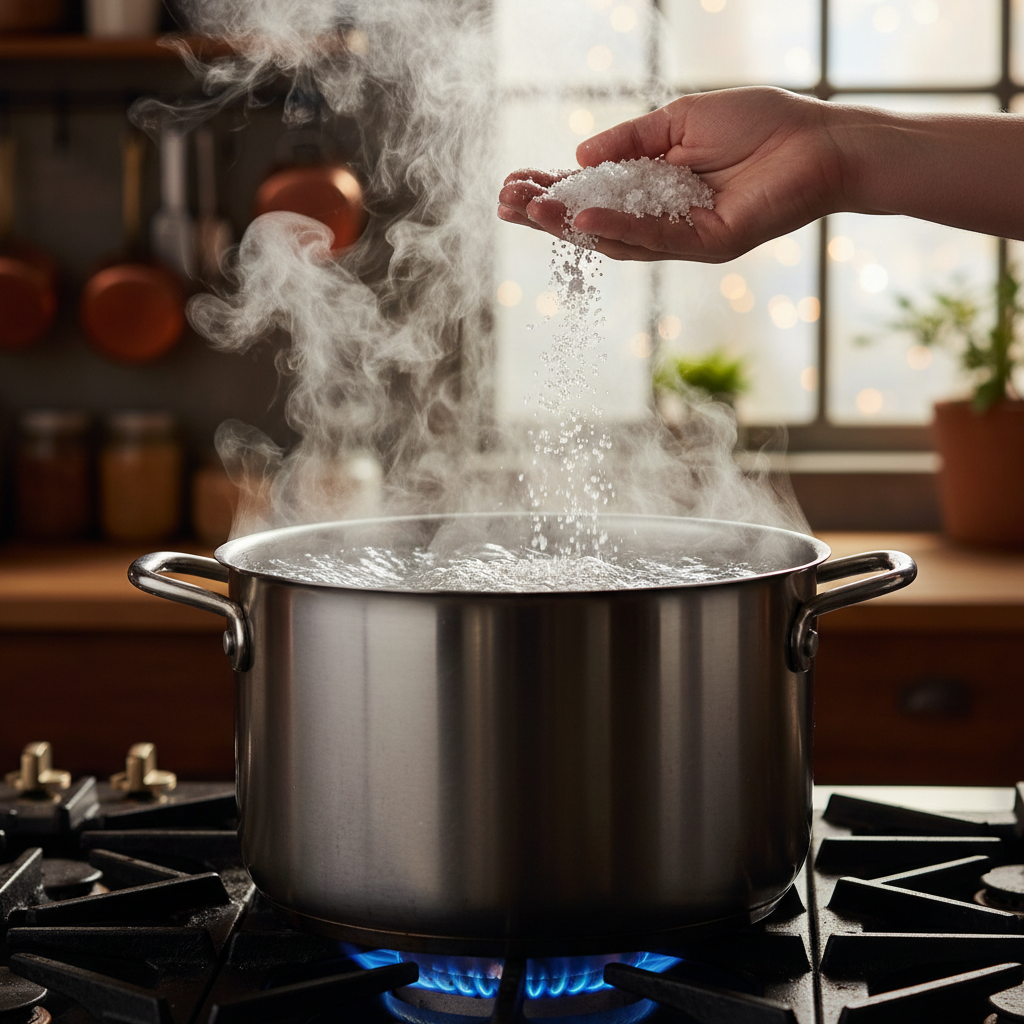
Add salt once the water is at a rolling boil, right before you drop in the pasta. Cold water with salt sitting in it can pit the bottom of some pots over years of use, particularly cheaper stainless steel. Beyond that, salting boiling water dissolves instantly and gets distributed evenly before the food goes in.
The Hack That Actually Works
Cover your pot. A lid traps heat and can reduce your time to boil by two to three minutes. Start with hot tap water if your tap runs hot. Use a heavy-bottomed pot that distributes heat evenly. These are the moves that genuinely cut cooking time. Salt is just for flavor.
Three More Water Hacks Worth Knowing
- Save pasta water before draining. One cup of starchy pasta water can rescue any sauce that is too thick or too greasy. It emulsifies fat and liquid together like nothing else.
- Ice bath after blanching. Drop green vegetables into ice water immediately after boiling to stop cooking. Keeps the color bright and the texture crisp.
- Boil eggs starting in cold water. Cold water start gives you more control over the yolk. Bring to a boil, cut heat, and let sit for 10-12 minutes for a perfect hard boil.
Understanding what heat, water, and salt are actually doing to your food is the foundation of cooking with confidence rather than just following instructions blindly. Start with the lid. Add the salt. Save the water. Small habits, better meals.
The Bottom Line
Salt does not make water boil faster in any practical sense. What it does is make everything you cook in that water taste significantly better. Pasta, vegetables, potatoes, eggs - they all benefit from properly salted cooking water in ways that no amount of finishing salt can replicate. The flavor gets into the food, not just onto it.
If you have been skipping the salt to save time, stop. The time difference is nonexistent. The flavor difference is real and immediate. Season your water and start covering your pot - that is the whole lesson.
{
"@context": "https://schema.org",
"@type": "FAQPage",
"mainEntity": [
{
"@type": "Question",
"name": "Where can I find the latest food deals and promotions",
"acceptedAnswer": {
"@type": "Answer",
"text": "TopFoodNews covers the latest food deals, promotions, and limited-time offers from major restaurant chains and food brands. Bookmark topfoodnews.com for daily updates."
}
},
{
"@type": "Question",
"name": "How long do restaurant promotions typically last",
"acceptedAnswer": {
"@type": "Answer",
"text": "Most restaurant promotions run for 1-4 weeks. Limited-time offers often end without notice, so it's best to take advantage of deals as soon as you see them."
}
},
{
"@type": "Question",
"name": "How do I find out about new food news first",
"acceptedAnswer": {
"@type": "Answer",
"text": "Subscribe to the TopFoodNews newsletter at topfoodnews.com/newsletter for daily food news, deals, and recipe drops delivered to your inbox."
}
}
]
}

in your inbox every week.