Starbucks Lemon Loaf Copycat: The Recipe That Actually Nails It
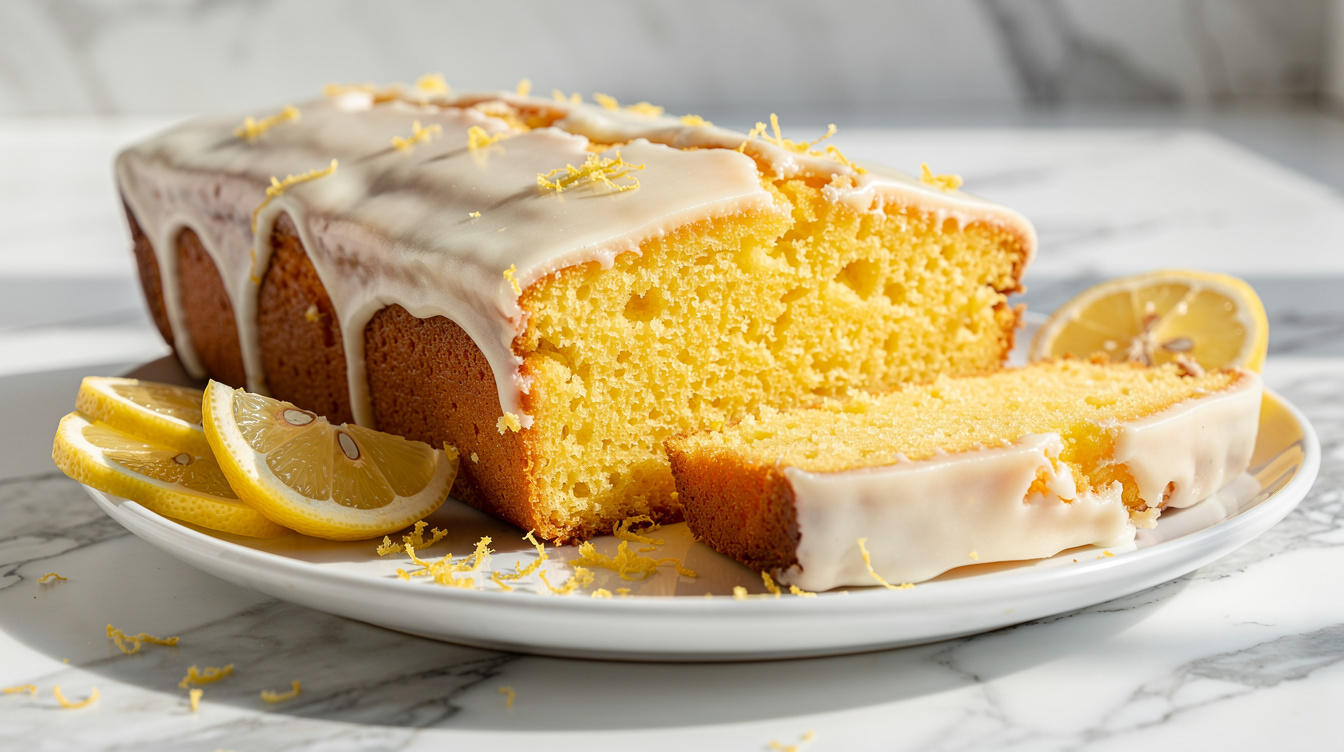
You know the one. Dense, bright yellow, soaked in a thick white glaze that sets into a crackle on the edges. The Starbucks Lemon Loaf is one of those things people order almost reflexively at the counter — not because they planned to, but because it is sitting there and it is impossible to say no. It has been on that pastry shelf for years and it is not going anywhere, because they nailed it.
The good news is it is not hard to replicate at home, and the homemade version is genuinely better. Fresher lemon flavor, a crumb that is softer on day two (the Starbucks version is shipped and warmed, not fresh-baked), and a glaze you can make as thick as you actually want. This recipe takes about an hour start to finish and makes a full loaf that cuts into 10 generous slices.
What Makes the Starbucks Lemon Loaf Distinctive
Three things set it apart from a generic lemon loaf. First, the density — it is closer to a pound cake than a light quick bread. It uses sour cream (or Greek yogurt) to add moisture and richness without making it heavy. Second, the lemon flavor comes from both zest and fresh juice, which gives it that sharp brightness instead of a flat, extract-y taste. Third, the glaze is thick and opaque, not a thin drizzle — it sits on top like a proper coating and sets firm enough to crack slightly when you slice it.
Nail those three things and you have the Starbucks Lemon Loaf. Here is how.
Starbucks Lemon Loaf Copycat Recipe
Ingredients — Loaf
- 1 1/2 cups all-purpose flour
- 1/2 teaspoon baking soda
- 1/2 teaspoon baking powder
- 1/2 teaspoon fine sea salt
- 3 large eggs, room temperature
- 1 cup granulated sugar
- 1/2 cup sour cream (full-fat) or full-fat Greek yogurt
- 1/2 cup neutral oil (vegetable or light olive oil)
- 2 tablespoons fresh lemon juice (about 1 large lemon)
- 2 teaspoons lemon zest (packed)
- 1 teaspoon vanilla extract
- 1/2 teaspoon lemon extract (optional, intensifies the lemon hit)
Ingredients — Lemon Glaze
- 1 1/2 cups powdered sugar, sifted
- 3 to 4 tablespoons fresh lemon juice
- 1 teaspoon lemon zest
- Pinch of salt
Instructions
- Preheat and prep. Heat your oven to 350F. Grease a standard 9×5 inch loaf pan and line it with parchment paper, leaving an overhang on the long sides. This makes it easy to lift the loaf out cleanly without cracking the glaze later.
- Combine dry ingredients. In a medium bowl, whisk together the flour, baking soda, baking powder, and salt. Set aside.
- Build the wet base. In a large bowl, whisk the eggs and sugar together for about 2 minutes until the mixture is slightly pale and thickened. Add the sour cream, oil, lemon juice, lemon zest, vanilla, and lemon extract if using. Whisk until fully combined and smooth.
- Combine wet and dry. Add the dry ingredients to the wet in two additions, folding with a rubber spatula until just combined. Do not overmix — stop when you no longer see dry streaks. A few small lumps are fine. The batter will be thick.
- Bake. Pour into the prepared pan and smooth the top. Bake for 50 to 60 minutes, until a toothpick inserted in the center comes out with just a few moist crumbs (not wet batter). The top should be golden and spring back lightly when pressed. If the top is browning too fast, tent loosely with foil after 40 minutes.
- Cool before glazing. Let the loaf cool in the pan for 15 minutes, then lift out using the parchment overhang and set on a wire rack. Cool completely — at least 1 hour — before glazing. If you glaze while warm, the glaze will soak in and disappear rather than set on top.
- Make the glaze. Whisk together sifted powdered sugar, lemon juice (start with 3 tablespoons), lemon zest, and a pinch of salt. The glaze should be thick but pourable — it should fall off the whisk in a slow, heavy ribbon. If too thick, add lemon juice a teaspoon at a time. If too thin, add more powdered sugar.
- Glaze the loaf. Set the wire rack over a baking sheet to catch drips. Pour the glaze over the top of the loaf slowly and evenly, letting it run down the sides naturally. Do not spread it — pour it on and let gravity do the work. Let set for 20 to 30 minutes before slicing. The glaze will go from shiny to matte as it sets.
Why Sour Cream?
The sour cream is doing two jobs here. The fat adds richness and keeps the crumb moist for days (this loaf is just as good on day three as day one). The slight acidity activates the baking soda, which gives the loaf a subtle lift without making it airy or cakey. It is the same reason bakers use buttermilk in pancakes or red velvet cake — the acid makes everything tender.
Full-fat Greek yogurt is an exact swap if you do not have sour cream. Do not use low-fat — the reduced fat content will make the loaf slightly drier and less rich. The Starbucks version has that noticeable density and richness because of the fat content, and you want to replicate that.
The Glaze: Thick Enough to Matter
Most lemon loaf recipes have a glaze that is too thin. It soaks into the top, leaves a faint sweetness, and disappears visually. The Starbucks version has a glaze that sits on top, goes fully opaque, and cracks slightly when you cut through it. That is what you are going for.
The key is the ratio: 1 1/2 cups of powdered sugar to just 3 to 4 tablespoons of liquid. That is thicker than most recipes call for. When you pour it on a completely cooled loaf, it sets into a proper coating rather than soaking in.
One more thing: always use fresh lemon juice in the glaze, not bottled. The difference is dramatic. Bottled lemon juice tastes flat and slightly metallic. Fresh juice is bright and sharp in a way that makes the glaze taste like lemon rather than sugar.
Camille’s Notes
- Room temperature eggs matter. Cold eggs can cause the batter to look curdled or slightly separated. Pull them out 30 minutes before you start.
- Zest before you juice. Always zest your lemons first, then juice them. Once you cut and juice a lemon, it is nearly impossible to zest cleanly.
- Do not skip the parchment overhang. Lifting a glazed loaf out of a pan by the sides risks cracking the glaze. The parchment handles make it clean.
- Double the glaze if you want a thicker coating. The recipe above gives a moderate glaze layer. If you want the full thick Starbucks coating, make 1.5x the glaze batch.
- This loaf freezes well. Slice before freezing, separate slices with parchment, and freeze in an airtight bag. Thaw at room temperature for 20 minutes. The glaze holds up fine through freezing.
How to Store It
Once the glaze has fully set, cover the loaf loosely with plastic wrap or store in an airtight container at room temperature for up to 4 days. Do not refrigerate — the cold dries out the crumb and mutes the lemon flavor. If your kitchen runs warm, the glaze may stay slightly tacky on the surface; that is normal and does not affect the flavor or texture inside.
Nutrition (Per Slice, Approximate)
Based on 10 slices per loaf:
- Calories: 310
- Fat: 12g
- Carbohydrates: 48g
- Sugar: 32g
- Protein: 4g
- Sodium: 160mg
Final Thought
The Starbucks Lemon Loaf is a genuinely good pastry. The copycat is better — fresher, more lemon-forward, softer crumb, and you control the glaze thickness. Once you make it at home you will understand why people have been recreating this specific recipe for years. It is not complicated. It just requires paying attention to three things: the fat content, the fresh lemon, and letting the loaf cool completely before you glaze it. Get those right and it is spot on.